Tooley Water District Guidance After the Rowena Fire
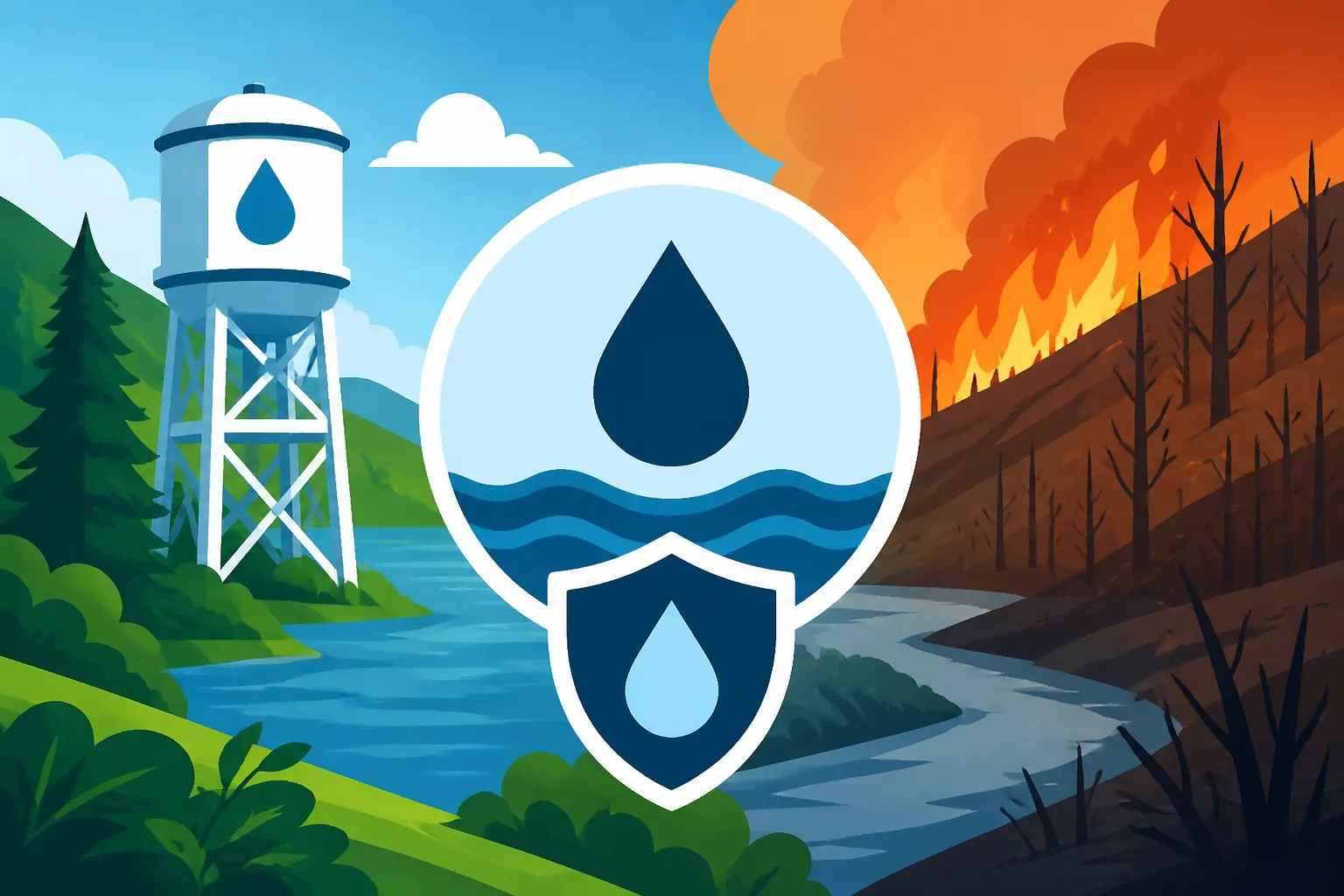
A wildfire can leave customers unsure whether tap water is affected, whether to boil it, or when it is safe to use household plumbing again. For Tooley Water District customers after the Rowena Fire, the key is to follow current official instructions—not assume that every nearby property has the same water status. Here’s how to check notices, respond to possible service impacts, and handle plumbing after clearance.
Start With the Current Notice for Your Address
A fire’s location alone does not tell you whether your tap water is affected. Water systems have different sources, treatment equipment and distribution lines, and fire impacts can vary from one area to another. A notice might apply to a particular part of a system, a set of customers, or a temporary condition. Before changing how you use water, confirm what applies to your address.
Check Tooley Water District’s current official information and any notice delivered directly to customers. If the district identifies a boil-water advisory, do-not-drink notice, do-not-use instruction or another restriction, follow its exact directions. These instructions address different situations, so do not treat them as interchangeable. For example, boiling is appropriate only when an official instruction says to boil water; it is not a universal response to a fire-related concern.
If you cannot find a current notice, do not infer that there is—or is not—an active restriction from social media, a neighbor’s account or a message about a different service area. Use the district’s official website to find current contact details and ask whether your address is covered. Oregon’s Oregon Drinking Water Advisories Map: Checking Active Notices can provide another way to check for listed notices, but confirm any instruction with the water supplier.
| What you find | What to do |
|---|---|
| A current notice naming your address or service area | Follow its exact directions, including which water uses are restricted and how customers will be told when the restriction changes. |
| A notice that applies to another area | Do not assume it applies to your address. Confirm your service area with Tooley Water District. |
| No notice you can verify | Contact the district through its official website for current guidance. Do not use taste, smell or appearance as a safety test. |
| Conflicting messages | Ask the district which instruction is current and which customers it covers. Until you clarify the situation, follow the more protective current direction that applies to your address. |
| A change in water pressure, color, taste or odor | Report it to the district and check for a current notice. A change is a reason to ask, not proof by itself that water is unsafe. |
When asking about a notice, have your service address available and ask specific questions: Does the instruction apply to this address? Which uses are affected? Is there a particular alternative water source or handling step customers should use? What official channel will announce that the restriction has ended? These questions help distinguish an active system instruction from general wildfire information.
If customers receive a boil-water advisory, the supplier’s instructions take priority over general advice. How Oregon Water Systems Issue Boil-Water Notices explains why systems may issue these notices and why customers should follow the details rather than guess at the reason. Do not assume an advisory means contamination was confirmed; a notice may be precautionary while the system investigates a condition such as a pressure loss.
Likewise, do not stop following a notice just because water looks normal or a nearby customer says service has returned to normal. Wait for an official update that clearly applies to your area. For more on how that update may reach customers, see How Oregon Water Utilities Notify You When a Boil Advisory Ends.
Why a Wildfire Can Affect a Water System
A fire can create several kinds of water-system challenges, but the possible effects are not the same as proof that a particular supply has been contaminated. Fire can damage power, access roads, equipment or pipes. Repairs and pressure changes can also disturb sediment or change water movement in parts of a distribution system. Ash and runoff may affect a source or intake if they reach it, while treatment systems may need inspection or adjustment.
What matters for a customer is whether the district has identified an impact to its system and issued instructions. Utilities assess their own sources and infrastructure and coordinate with appropriate officials when needed. Customers should not try to diagnose a system-wide problem by examining a glass of tap water.
A loss of pressure is one reason to pay close attention to official notices. Water systems are designed and operated to maintain conditions that protect water as it moves through pipes. If pressure drops, the supplier may issue a precautionary notice while checking the system. The situation and response depend on the affected system and the utility’s assessment. Wildfire Pipe Damage and Pressure Loss: Oregon Tap Risks describes why fire-related infrastructure problems can matter even when no visible damage appears inside a home.
Fire may also leave ash and debris on land, where rain or firefighting activity can move material into waterways. That possibility does not establish that Tooley Water District’s source was affected. The system’s own assessment is the relevant basis for customer instructions. For background on possible pathways, see Can Wildfire Ash and Runoff Contaminate Oregon Tap Water?.
For customers, the practical distinction is between a potential pathway and a confirmed, current instruction. A nearby burn area, a smoky smell outdoors or visible ash on a property does not by itself tell you whether district water is safe to drink. Similarly, clear water is not proof that no concern exists. When the utility or a health authority issues a specific notice, use that notice to decide what to do.
Water quality questions can also arise after repairs. Work on a main, a pressure change or flushing by the water supplier may temporarily affect appearance or odor. The district can determine whether a reported change is expected, whether it needs investigation, and whether customers should take any action. Do not assume that an unusual taste is harmless, but do not assume it proves contamination either. Report it and ask for current guidance.
What to Do at Home While Instructions Are in Effect
The notice’s exact wording matters. A boil-water advisory, a do-not-drink notice and a do-not-use instruction can have different purposes and require different actions. Follow the directions for your address, including any limits on drinking, cooking, brushing teeth, making ice, bathing or other uses. Do not substitute a general online checklist for the supplier’s specific instructions.
If an instruction tells you to use boiled water, follow the supplier’s stated method and uses. Boiling does not remove every possible contaminant, and it is not a substitute for a do-not-use instruction. If the notice instead directs customers to use bottled water or another source, follow that direction rather than assuming boiling will solve the problem.
Use alternative water for the activities named in the notice. If you are unsure whether a use is included, ask the district or the authority identified in the notice. It is especially important not to improvise for drinking, food preparation, infant feeding, making ice or preparing beverages. For specific health questions about water use, contact a local health department or medical professional.
A filter pitcher, refrigerator filter or under-sink treatment device should not be treated as a way to override an advisory. Household filters are designed and certified for particular reductions, not for every possible wildfire-related issue. Their performance depends on the model, its condition and the contaminant it is intended to reduce. A filter also does not replace a system-wide instruction. Filtering Tap Water in Oregon: What Pitcher Units Actually Remove explains why matching a filter to a defined concern matters.
Do not collect water from a stream, spring or other nearby source as a substitute unless the relevant official guidance specifically identifies it as suitable. Water that looks clear can still contain contaminants or microbes, and surface water can be affected by fire, runoff or other conditions.
If the district asks customers to conserve water or avoid a particular use during repairs, follow that request. Avoid activities that could interfere with system recovery or create problems in household plumbing. Check the official notice for the applicable steps rather than assuming the same directions apply to every customer.
Keep a record of the information you rely on. Save the notice or note its date, the service area it covers and the instructions for ending the restriction. If you speak with the district, write down the answer and any follow-up steps. This is useful when information changes or when more than one household member needs to know what to do.
After Clearance: Using Household Plumbing Again
An official notice ending a restriction is not the same thing as permission to skip any recovery steps the district specifies. Some customers may be told to flush household plumbing; others may receive different instructions. Follow the supplier’s directions for your service area and home. If the notice does not say what to do with indoor plumbing, ask before carrying out a broad flushing routine.
When flushing is directed, use the method and sequence the district provides. The steps may depend on the issue, the condition of the system and the plumbing in the home. A general instruction from a different wildfire or water system may not fit your situation. Flushing Home Plumbing After Oregon Wildfire Alerts offers context on why flushing guidance should follow the particular alert, rather than a one-size-fits-all approach.
Household plumbing includes more than one tap. Depending on the instruction, a district might address cold-water faucets, appliances, filters, water heaters or other fixtures separately. Do not assume that running one faucet completes every step. Likewise, do not run a water treatment device through a flushing procedure unless its manufacturer and the district’s instructions support doing so. If you have a point-of-use filter or treatment system, check whether its manufacturer recommends maintenance or cartridge replacement after the event.
If you were away during the notice, ask whether the district recommends any additional steps for water that remained in your home’s pipes. Water can sit in household plumbing when a home is unoccupied, but the correct response depends on the current system guidance and the plumbing setup. Avoid flushing for an arbitrary length of time based only on a neighbor’s advice.
Pay attention to water appearance and pressure as service returns, but treat these observations as reasons to report a concern, not as tests of safety. If water is discolored, contains particles, has an unusual odor or arrives at noticeably different pressure, contact the district and describe the change. Follow its advice before drinking or using water if a notice remains active or the supplier asks customers to wait.
A home filter may need separate attention after prolonged nonuse, low pressure or a change in the water supply. Follow the device’s maintenance instructions, and do not assume a filter is ready for use just because water service has resumed. If you are considering installing treatment because of a specific result or notice, first identify the contaminant or problem and confirm that the equipment is certified for that purpose. Choosing Certified Drinking Water Filters Under Oregon Guidelines explains how to check whether a product’s certification matches the reduction you need.
If your home uses a private well rather than Tooley Water District service, district notices may not apply to it. A well can have different vulnerabilities and requires a separate assessment. Contact the appropriate local health authority or a qualified water professional for advice specific to that well. Do not assume a public-system clearance verifies a private well.
Reporting Problems and Keeping Useful Records
Report a problem to Tooley Water District through its official website or other current contact channel. A clear report helps the utility understand what is happening and where. Include your service address, when the change began, whether it is continuous or intermittent, and what you observe—such as a pressure change, discoloration, particles, or a new taste or odor. If neighbors are affected, mention that too, while making clear which observations are yours.
Avoid trying to repair or adjust district-owned equipment. If you are unsure whether a pipe, valve or meter belongs to the water supplier or the property owner, ask before touching it. The Public vs Private Plumbing: Who Owns the Line Past the Meter? article explains why ownership boundaries can matter when investigating service-line questions.
If a concern continues after the district says service is restored, contact the district again and refer to the earlier report. Ask whether the utility recommends further flushing, inspection or sampling, and who should perform it. Do not rely on an at-home screening test to confirm that a system-wide problem is resolved. Sampling methods and laboratory analysis need to match the question being investigated. For an overview of what utilities monitor, see Testing Municipal Tap Water in Oregon: What Utilities Track.
You can also keep copies of public notices and water-quality information for future reference. An annual Consumer Confidence Report summarizes information about a public water system, but it is not a real-time update about a wildfire incident. Use a current notice for an active event and the district’s official channels for instructions. Reading an Oregon Consumer Confidence Report: A Homeowner Guide explains what those annual reports can—and cannot—tell you.
If the district refers you to Oregon drinking-water officials or another public authority, use the official agency website to find current information and contact details. For a health concern, ask the local health department or a medical professional. This is particularly important if a notice gives specific precautions for people with health-related questions; the district can explain the water instruction, while a qualified health professional can address personal medical advice.
Frequently Asked Questions
Does the Rowena Fire mean Tooley Water District tap water is unsafe?
Not by itself. A fire’s proximity does not establish whether a particular water system or address is affected. Check Tooley Water District’s current official notices and confirm whether they apply to your service address.
Should I boil my water after the fire?
Boil water only when a current official instruction tells you to do so. Follow its exact directions. Boiling is not a universal response and does not remove every possible contaminant.
Is clear water safe to drink once service returns?
Appearance alone cannot confirm water safety. Follow the district’s clearance and any household flushing directions. Report unusual pressure, color, particles, taste or odor rather than relying on those observations as a safety test.
Can a household filter replace a water-system notice?
No. A household filter is designed for specific reductions and does not override a system-wide advisory or do-not-use instruction. Use it only as directed and check its certification for the particular contaminant of concern.
Disclaimer
This article is for general informational purposes only and does not constitute professional advice. Laws, prices and regulations vary by location and change over time. Consult a qualified professional for guidance on your specific situation. Oregon Water Guide is not a government agency or water utility and is not affiliated with any public water system.